

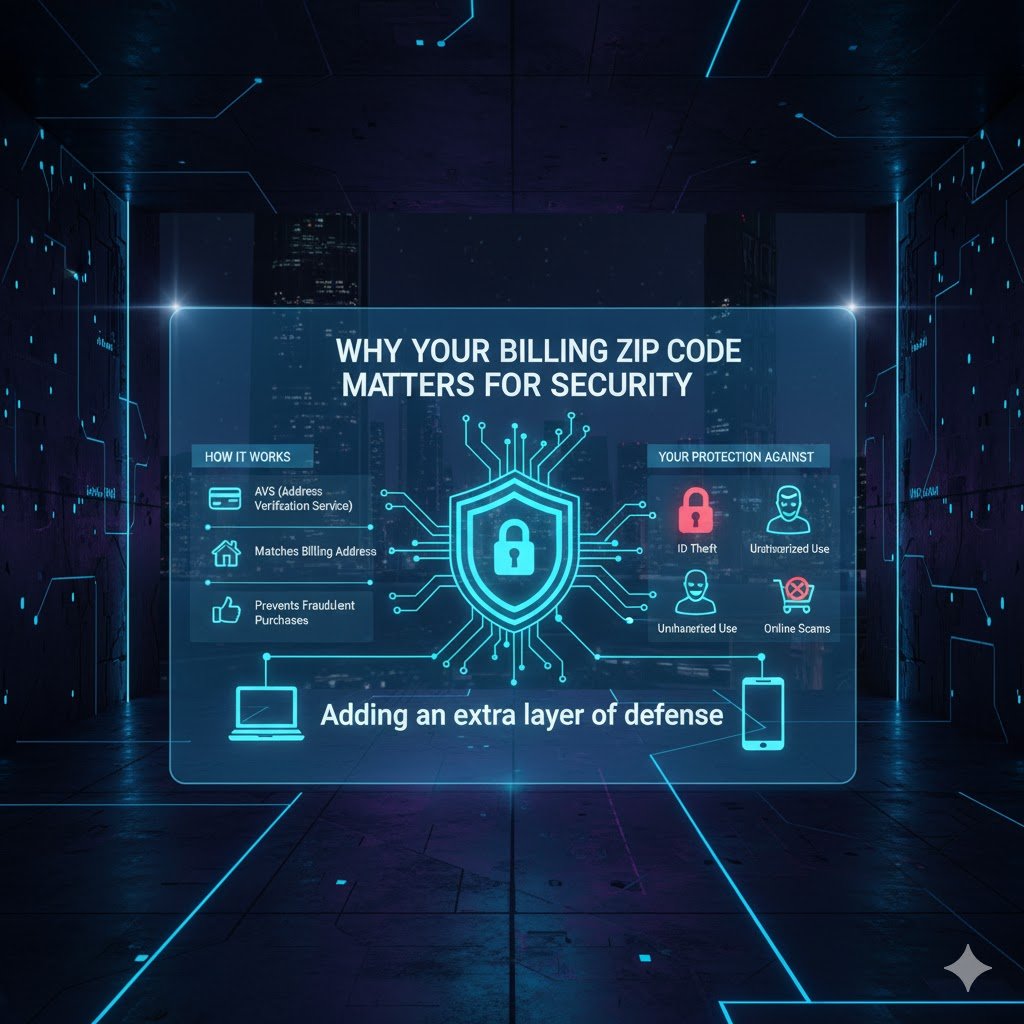
In the digital age, we are constantly asked to authenticate ourselves. From fingerprints and face IDs to two-factor authentication, the modern world runs on verification. Yet, amidst these high-tech solutions, a simple, five-digit number remains a critical pillar of financial security: your billing zip code.
Often overlooked as just another field to fill out during an online purchase, the humble billing zip code is a powerful tool in the fight against fraud. It acts as a silent guardian, working behind the scenes to ensure that you, and only you, are authorizing transactions. Understanding its role not only demystifies the checkout process but also highlights the importance of keeping this information accurate and secure.
This article explores the three key reasons why this piece of your address is so crucial for protecting your finances.
1. The First Line of Defense: Address Verification System (AVS)
At its core, the billing zip code is the cornerstone of the Address Verification System (AVS). AVS is a fraud-prevention service used by credit and debit card processors in the U.S., Canada, and the UK. Here’s how it works in practice:
When you make a “Card Not Present” transaction—like an online purchase or a payment over the phone—the merchant sends the payment information you entered (card number, expiration date, and your billing zip code) to your bank or card issuer.
Your bank instantly checks the zip code and street number you provided against the official address they have on file for that card. The bank then sends a response back to the merchant:
- Full Match: The street number and zip code match perfectly. This is a strong signal that the transaction is legitimate.
- Partial Match: Only the zip code matches, but the street number does not. This can sometimes still result in an approved transaction but with a higher risk flag.
- No Match: The provided zip code does not match the one on file. This is a major red flag for potential fraud.
If there’s no match, the merchant can decline the transaction immediately, stopping a fraudulent purchase in its tracks. This simple check is often the first and most effective barrier against someone who may have stolen your credit card number but doesn’t know your personal address details.
2. Something You Know: The Two-Factor Authentication Analogy
Think of your payment security as having two layers. The first layer is “something you have”—your physical credit card number. If your card is stolen or its number is skimmed, a fraudster gains possession of this first layer.
The second layer is “something you know.” This is where your billing zip code comes into play. It acts as a simple form of knowledge-based authentication. While not as strong as a unique password, it is a piece of personal information that is not stored on the magnetic stripe of your card or easily visible to someone who simply finds your lost wallet.
A thief might have your card, but unless they also know where you receive your bank statements, they will fail the AVS check. This principle is why gas stations at the pump and many online retailers mandate the use of your zip code. It adds a crucial verification step that separates an authorized user from a casual thief.
3. Balancing Security with a Frictionless Experience
From a business perspective, AVS and the use of your billing zip code help merchants walk a fine line between robust security and a smooth customer experience. Requiring excessive information leads to “cart abandonment,” where frustrated customers leave without completing their purchase.
Asking for your zip code is a relatively low-friction request. It’s easy for the legitimate customer to recall but creates a significant hurdle for a fraudster. By using this check, merchants can:
- Reduce chargebacks (disputed transactions that cost businesses money).
- Lower their overall fraud rates.
- Build trust with financial institutions.
- Protect their customers without making the checkout process overly cumbersome.
This balance is essential for the health of the e-commerce ecosystem, allowing businesses to operate safely while providing you with a relatively quick and easy way to shop.
Conclusion
Your billing zip code is far more than a geographical identifier. It is an integral part of a sophisticated, behind-the-scenes security system designed to protect your hard-earned money. The next time you’re prompted to enter it at an online checkout or a gas pump, remember that this small action plays a vital role in verifying your identity and keeping fraudsters at bay. By ensuring this information is always up-to-date with your bank, you actively participate in your own financial security.
FAQ: Billing Zip Code Security
Q1: What should I do if my billing zip code is not being accepted?
First, double-check that you are entering the zip code associated with the billing address for your credit card, which may be different from your current shipping address. If it continues to fail, the most likely cause is that your bank has an old zip code on file. Contact your card issuer directly to verify and update your official billing address.
Q2: Is it safe to give out my billing zip code?
You should only provide your billing zip code to legitimate and secure merchants during a transaction. Never give it out in response to an unsolicited phone call, email, or text message. Legitimate businesses use it for verification, while scammers may try to collect it as part of a larger identity theft scheme.
Q3: I use a PO Box for my mail. What is my billing zip code?
This is a common point of confusion. The AVS system typically requires the physical street address associated with your card account. If you use a PO Box for mailing, you may need to use the zip code of the post office where your box is located. However, the most reliable solution is to call your bank and confirm exactly which address and zip code they have registered for AVS purposes.
Q4: Does the billing zip code security work for international purchases?
The Address Verification System is primarily a feature for cards and merchants within the U.S., Canada, and the UK. When making a purchase from a merchant in a different country, the AVS check may not apply, or the field may not even be requested. In these cases, other security measures, like 3D Secure (e.g., “Verified by Visa”), often take precedence.
