

The Perfect Storm: Layoffs Meet Launch Season
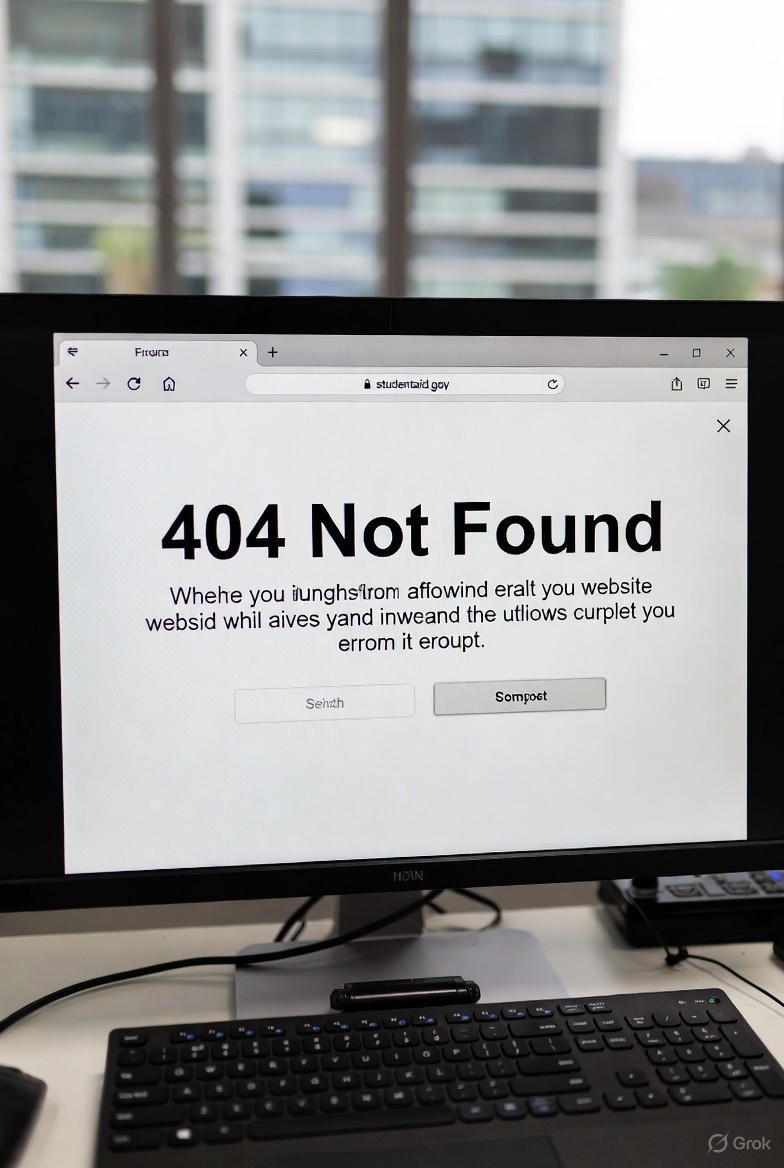
On March 13, 2025, as high school seniors and college transfer students nationwide scrambled to secure their financial futures, the federal government’s lifeline for student aid—the Free Application for Federal Student Aid (FAFSA)—vanished. The studentaid.gov portal, the gateway to billions in grants, loans, and scholarships, experienced a crippling outage that lasted over six hours, leaving thousands in limbo just weeks before key deadlines. This wasn’t a random glitch or a cyberattack; it was the direct fallout from the U.S. Department of Education’s sweeping staff reductions, which had gutted nearly half the agency’s workforce only two days prior. The fafsa site goes down for hours after education department layoff became an instant rallying cry on social media, symbolizing the chaotic unraveling of a critical public service under the Trump administration’s aggressive downsizing agenda.
The outage struck at the worst possible moment. With the 2025-26 FAFSA cycle in full swing—following a delayed soft launch in late December 2024—applicants were racing against state-specific priority deadlines, many falling in early April. Reports flooded Downdetector and Reddit, with users venting frustration: “Logged in at 10 a.m., form half-done, poof—gone. Blaming the layoffs?” one parent posted. By midday, the site displayed a vague “Planned Maintenance” banner, severing login access entirely and halting progress for an estimated 200,000 active sessions. For low-income families relying on Pell Grants or first-generation students navigating the revamped form’s complexities, the disruption wasn’t just inconvenient—it threatened college dreams.
This incident wasn’t isolated. It capped a year of turmoil for the FAFSA, from the 2024-25 cycle’s infamous delays to ongoing technical hiccups that had already slashed application rates by 9% among first-timers. But the fafsa site goes down for hours after education department layoff exposed a deeper vulnerability: an understaffed agency ill-equipped to maintain the infrastructure supporting 17 million annual applicants. As Education Secretary Linda McMahon touted the cuts as “efficiency measures” toward the department’s eventual dissolution, critics decried it as negligence bordering on sabotage.
A Troubled History: FAFSA’s Rocky Road to Simplification
To understand the March 13 meltdown, one must rewind to the FAFSA’s fraught evolution. Mandated by Congress via the 2020 FAFSA Simplification Act, the form was overhauled to reduce barriers—eliminating sibling discounts, streamlining parent data entry, and expanding Pell eligibility to an additional 1.5 million students. What should have been a user-friendly upgrade turned into a nightmare. The 2024-25 launch, postponed from October 1 to December 30, 2023, was dubbed a “soft launch” amid beta testing woes: IRS data mismatches, endless loading screens, and phantom errors that erased hours of input.
By January 2024, the Government Accountability Office (GAO) reported a cascade of issues, including a 432,000-application drop-off and colleges delaying aid packages by months. Applicants, many from underserved communities, bore the brunt—Black and Latino students saw disproportionate declines in submissions. The Department of Education (ED) scrambled with hotfixes, but glitches persisted into the 2025-26 cycle, launched December 1, 2024, with promises of stability.
Enter the layoffs. On March 11, 2025, ED announced a reduction-in-force (RIF) axing 1,300 positions—nearly 50% of its 4,200-strong workforce. Targeted were IT support, developers, and Federal Student Aid (FSA) specialists who maintained the FAFSA backend. Secretary McMahon framed it as fulfilling President Trump’s “final mission” to shutter the department, redirecting funds to states and vouchers. But with the RIF came chaos: servers unmonitored, code unpatched, and a skeleton crew overwhelmed by peak-season traffic.
The fafsa site goes down for hours after education department layoff wasn’t hyperbole. Downdetector spikes hit 1,500 reports by 2 p.m. ET, with users from California to New York unable to submit or even view prior-year data. The National Association of Student Financial Aid Administrators (NASFAA) fielded frantic calls from 500+ institutions, warning of a “national crisis” in aid processing. One Texas counselor told AP News: “Kids are panicking. This isn’t a glitch; it’s abandonment.”
The Layoff Onslaught: From Policy to Panic
The March RIF was the crescendo of a downsizing symphony that began with Trump’s January 2025 inauguration. An executive order invoked the “DOGE Workforce Optimization Initiative,” slashing federal bloat across agencies. ED, long a Trump target, bore the brunt: voluntary buyouts in February netted 600 exits, followed by the mass firings. By summer, the Supreme Court greenlit further cuts, lifting injunctions despite dissents from Justices Sotomayor, Kagan, and Jackson labeling it “indefensible.”
Impacted offices read like a vulnerability map. The Office of Elementary and Secondary Education lost 466 staff, gutting oversight for programs like IDEA (Individuals with Disabilities Education Act). The Office for Civil Rights (OCR) shed half its investigators, ballooning a discrimination complaint backlog to 22,000+ cases. But FSA, home to FAFSA’s digital guardians, was hit hardest: 121 positions vaporized, including coders versed in the form’s IRS Direct Data Exchange integration.
Advocates like the Center for American Progress warned of “catastrophic ripple effects.” Laid-off workers, many on paid administrative leave amid lawsuits, watched helplessly as systems they built faltered. One anonymous developer told NPR: “We patched FAFSA nightly. Now? It’s a ghost town.” The fafsa site goes down for hours after education department layoff crystallized these fears, with ED’s Friday recall of some OCR staff for backlog duty doing little to stem the tide.
User Stories: Heartbreak in the Heartland
The outage’s human toll was immediate and visceral. In rural Ohio, 17-year-old Maria Gonzalez, a first-gen Latina student, lost three hours of form-filling—her family’s income details, tax records, everything—erased mid-submission. “I cried,” she shared on TikTok, her video garnering 500,000 views. “Mom works two jobs; we can’t afford college without aid.” Similar tales poured in: a Florida veteran stalled on GI Bill recertification; a California parent whose disabled child’s dependency status glitched out.
NASFAA’s survey post-outage revealed 65% of aid offices reported client distress, with 40% delaying awards. Low-income applicants, already underrepresented, suffered most—Black students’ submission rates dipped another 5% in the ensuing weeks. Social media amplified the outrage: #FAFSAShutdown trended with 2 million posts, blending memes of tumbling dominos (layoffs to crashes) with pleas for congressional intervention.
ED’s response? A terse 5 p.m. tweet: “Temporary maintenance resolved. Apologies for inconvenience.” No mention of the layoffs’ role, fueling accusations of opacity. By evening, partial access returned, but trust was shattered. The fafsa site goes down for hours after education department layoff morphed into a meme, but for affected families, it was a harbinger of systemic collapse.
Expert Backlash: Warnings of a Tipping Point
Educators and policymakers sounded alarms. GAO’s Melissa Emrey-Arras testified in September 2024 that prior delays cost students $1.7 billion in unclaimed aid; now, with staffing halved, “oversight is illusory.” NASFAA President Justin Draeger called the outage “predictable negligence,” urging Congress to halt further RIFs.
Civil rights groups decried the irony: OCR’s emasculation amid rising complaints, while FSA’s woes exacerbate inequities. Disability advocates, reeling from OSERS cuts (121 positions gone), feared IDEA compliance would plummet, denying 7 million special ed students their rights. “Layoffs aren’t savings; they’re sabotage,” thundered Sen. Elizabeth Warren in a floor speech.
Bipartisan pushback emerged: A March 20 House hearing grilled McMahon, who deflected to “transition efficiencies.” Lawsuits piled up—unions challenging RIFs, states suing for aid delays—tying up 299 OCR staff in limbo. Yet, with Trump’s department-dismantling EO looming, experts like MSU’s Joshua Cowen warned: “This tips special ed into crisis.”
The fafsa site goes down for hours after education department layoff wasn’t mere coincidence; it was consequence. As ED’s headcount dipped to 2,183, the agency’s capacity to serve 50 million students frayed.
Broader Ramifications: A Nation’s Education at Risk
The outage’s shadow looms large. Colleges, already strained by enrollment dips, face aid package delays into summer, potentially spiking dropouts among 40% low-income undergrads. States like California and New York, with robust aid programs, braced for federal shortfalls, while rural districts—home to 20% of applicants—grappled with spotty internet exacerbating access woes.
Policy ripple effects abound. Trump’s voucher push, now ED’s “legacy,” diverts billions from public schools, but without robust oversight, fraud risks soar. Internationally, the U.S. risks ceding ground in higher ed equity, as OECD peers invest in seamless aid systems.
Yet, glimmers of resilience shine: Grassroots groups like Fastweb offered manual workarounds, and NASFAA’s helpline fielded 10,000 calls in 24 hours. Students like Maria launched petitions, amassing 100,000 signatures for ED funding restoration.
Conclusion: From Crash to Crossroads
The March 13 outage wasn’t a blip; it was a breaking point. As the fafsa site goes down for hours after education department layoff etched into headlines, it forced a reckoning: Can America’s education engine run on fumes? With lawsuits pending and midterms looming, Congress holds the throttle. For now, millions of students wait—not just for servers to reboot, but for a system that values their futures over fiscal theater. In the words of one laid-off FSA coder: “We built bridges; they burned them.” The rebuild starts now.
FAQ – FAFSA Website Crashes After Education Department Staff Cuts
What caused the FAFSA website crash on March 13, 2025? The outage stemmed from understaffing after the Education Department’s March 11 layoffs, which cut nearly 50% of its workforce, including key IT and FSA support roles.
How long did the fafsa site go down for hours after education department layoff? The studentaid.gov portal was inaccessible for over six hours, from midday to evening, halting submissions and logins for thousands of users.
Who was most affected by the outage? Low-income, first-generation, and minority students suffered most, as delays threatened timely aid awards and college enrollment decisions.
What are the broader impacts of the Education Department layoffs? Cuts have crippled oversight in special education, civil rights, and student aid, leading to backlogs, delayed services, and heightened inequities.
How can students recover lost FAFSA progress after the crash? Use the site’s “Retrieve Application” tool with your FSA ID, or contact NASFAA/college aid offices for manual extensions and paper alternatives.
Is the FAFSA system stable now, post-layoff outage? Partial fixes were applied, but experts warn of recurring issues due to ongoing staffing shortages and unresolved technical debts.
What is the Trump administration’s response to the fafsa site going down for hours after education department layoff? Officials cited “planned maintenance” without acknowledging layoffs’ role, while pushing forward with department downsizing plans.
Can Congress stop further Education Department cuts? Yes—bipartisan bills are pending to protect core functions like FAFSA; advocacy from groups like NASFAA urges immediate action.

1 Comment
Pingback: how to learn from home with online courses - Financial Technology News | Business News