

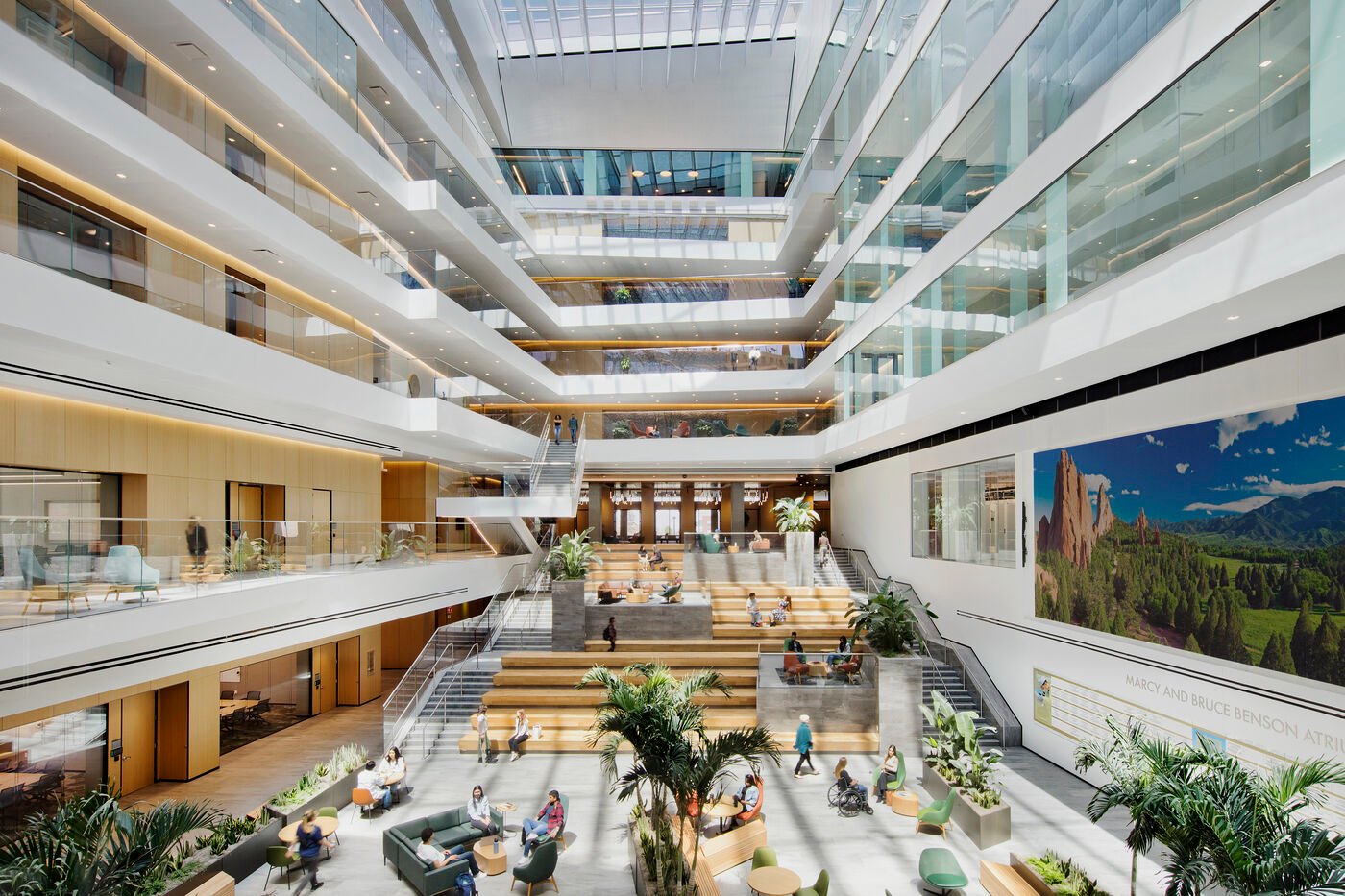
On the sprawling campus of the University of Colorado Anschutz Medical Campus, a single structure stands as a physical manifestation of a powerful idea: that the greatest medical breakthroughs happen not in isolation, but at the intersection of diverse disciplines. The Anschutz Health Sciences Building (AHSB) is more than just steel, glass, and concrete; it is a dynamic ecosystem meticulously designed to foster collaboration and accelerate the journey from a laboratory bench to a patient’s bedside. As a dedicated hub of medical discovery, it brings together the brightest minds in research, clinical practice, and education under one roof, creating a synergistic environment where innovation is not just encouraged—it is inevitable.
The very architecture of the AHSB is engineered to break down the traditional silos that have often hindered scientific progress. Instead of housing individual departments in separate wings, the building is organized around open atriums, shared laboratory spaces, and communal areas strategically placed to encourage unplanned interactions. A geneticist might bump into a neuroscientist at the coffee bar, leading to a conversation that sparks a new approach to understanding Parkinson’s disease. A data analyst collaborating with a clinical oncologist could develop a novel algorithm for predicting patient responses to therapy. This intentional design philosophy transforms the building from a mere facility into a living, breathing catalyst for collaboration, solidifying its role as a central hub of medical discovery.
The Pillars of Discovery Within Its Walls
The groundbreaking work within the AHSB is supported by several core pillars, each contributing to its status as a premier research institution.
1. Cutting-Edge Research Facilities:
The building houses state-of-the-art laboratories equipped with technology that pushes the boundaries of what is possible. From high-throughput genomic sequencers that can decode DNA at staggering speeds to advanced imaging systems that allow researchers to visualize biological processes in real-time, the AHSB provides the tools necessary for pioneering science. These shared resources are accessible to researchers across different fields, preventing duplication of equipment and fostering a culture of shared knowledge and methodology.
2. A Multidisciplinary Research Community:
The AHSB is home to a diverse collective of experts from the University of Colorado School of Medicine and other partner institutions. Under this one roof, molecular biologists work alongside bioengineers, psychiatrists collaborate with public health experts, and immunologists partner with pharmaceutical scientists. This convergence of expertise is crucial for tackling complex diseases like cancer, Alzheimer’s, and autoimmune disorders, which cannot be understood or cured from a single perspective. The building’s environment ensures that a challenge in one field can be rapidly addressed with solutions from another.
3. The Integration of Data and Human Insight:
In the modern era, discovery is increasingly driven by data. The AHSB leverages its position within a leading academic medical center to integrate vast amounts of clinical data with fundamental research. By analyzing anonymized patient records, genomic information, and treatment outcomes, researchers can identify patterns, uncover the root causes of disease, and develop personalized medicine strategies tailored to an individual’s unique genetic makeup. This powerful feedback loop, where clinical observations inform research questions and research findings are rapidly translated into clinical trials, is the engine of the hub of medical discovery.
From Labs to Lives: Tangible Impacts of the Work
The discoveries born within the AHSB’s collaborative spaces have a direct and profound impact on human health worldwide. Research conducted here has led to:
- Advances in Neuroscience: Pioneering studies on the brain’s circuitry and the neurobiology of addiction and mental health disorders, leading to new therapeutic targets.
- Innovations in Cancer Care: Development of novel immunotherapies and targeted drug treatments that offer hope to patients with previously untreatable cancers.
- Breakthroughs in Personalized Medicine: Creating diagnostic tools and treatments based on a patient’s specific genetic profile, moving away from a one-size-fits-all approach to healthcare.
- Understanding of Metabolic Disease: Groundbreaking research into obesity, diabetes, and cardiovascular disease, leading to new preventative strategies and interventions.
Furthermore, the AHSB is not just a place for established researchers. It is a training ground for the next generation of scientists and physicians. Students, postdoctoral fellows, and medical residents work alongside world-renowned investigators, learning not only technical skills but also the collaborative ethos that defines the building. They carry this model of integrated, team-based science forward, ensuring that the legacy of the AHSB as a hub of medical discovery will continue to fuel progress for decades to come.
Conclusion: A Blueprint for the Future of Medicine
The Anschutz Health Sciences Building stands as a testament to a forward-thinking vision for medical progress. It demonstrates that the environment in which research is conducted is just as critical as the research questions themselves. By physically and philosophically uniting disparate fields, it has created a hotbed of innovation where the sum is truly greater than its parts. As the teams within its walls continue to unravel the mysteries of human biology and disease, the AHSB will remain a vital and dynamic epicenter for the discoveries that will define the future of medicine, cementing its global reputation as an indispensable hub of medical discovery.
Frequently Asked Questions (FAQ)
Q1: Where is the Anschutz Health Sciences Building located?
A: The Anschutz Health Sciences Building is located at 1890 N. Revere Court on the University of Colorado Anschutz Medical Campus in Aurora, Colorado. It is a central and iconic structure on the campus.
Q2: What is the main purpose of the AHSB?
A: The primary purpose of the AHSB is to foster interdisciplinary medical research. It is intentionally designed to bring together researchers, clinicians, and educators from various fields to collaborate on groundbreaking scientific discoveries and accelerate the translation of that research into new treatments and cures for patients.
Q3: Who works in the Anschutz Health Sciences Building?
A: The building houses a wide range of professionals, including principal investigators, postdoctoral researchers, graduate students, lab technicians, and faculty from the University of Colorado School of Medicine. It often includes experts in fields like genomics, neuroscience, cancer biology, immunology, and bioinformatics.
Q4: How does the building’s design promote collaboration?
A: The AHSB’s architecture is specifically designed to encourage interaction. It features open floor plans, shared laboratory “neighborhoods,” transparent walls to make science visible, and numerous communal spaces like atriums, cafes, and meeting areas that facilitate spontaneous conversations and idea-sharing among scientists from different disciplines.
Q5: Can the public access any services in the AHSB?
A: While the AHSB itself is primarily a research facility, it is part of the larger Anschutz Medical Campus, which includes public-facing hospitals and clinics like UCHealth University of Colorado Hospital and Children’s Hospital Colorado. Patients may participate in clinical trials that are managed or supported by researchers working within the AHSB.
