

Introduction
In a major anti-corruption move, the Prime Minister of Pakistan has ordered immediate and strict action against individuals involved in a large financial irregularity linked to solar energy imports. This case has raised serious concerns across government institutions because it involves massive alleged financial misconduct. The issue, widely known as the solar panel money laundering scandal, has now become a top priority for national accountability agencies.
PM Takes Immediate Action
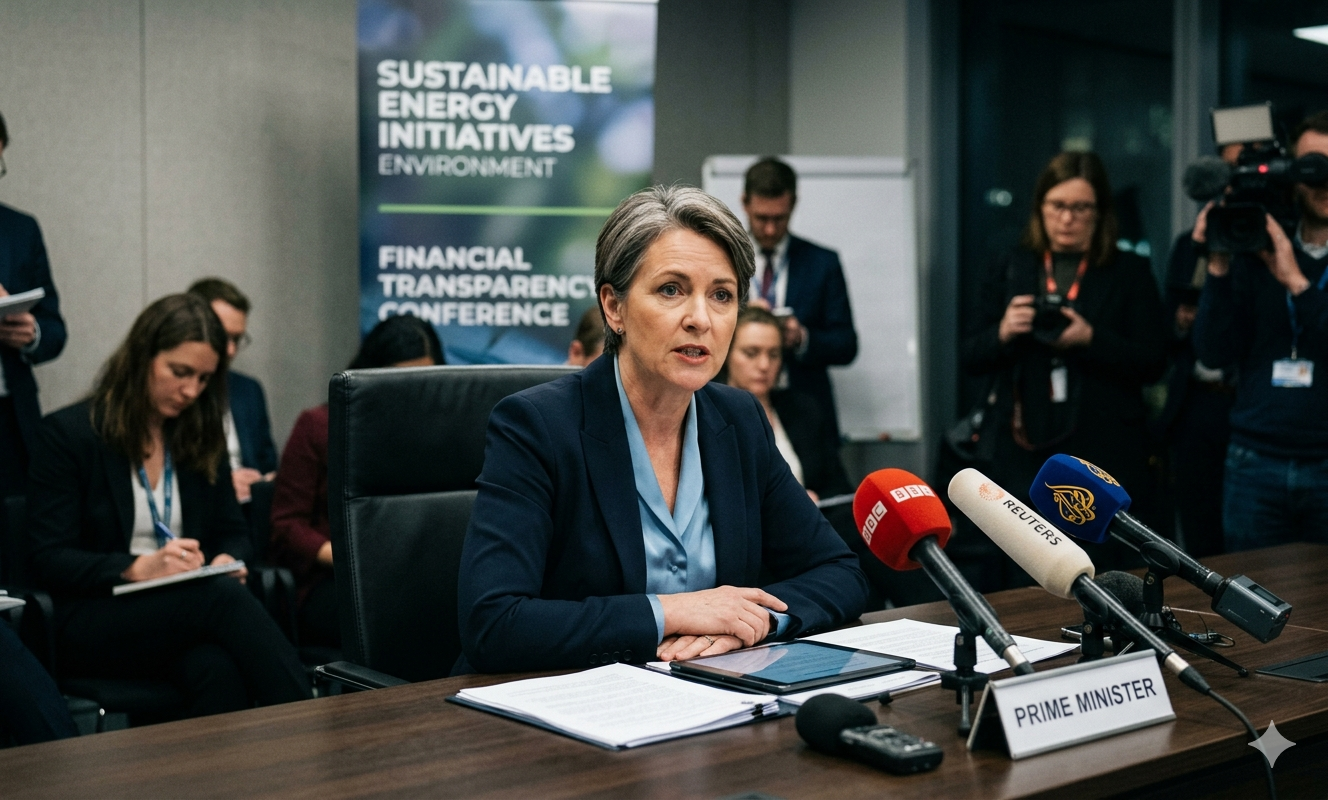
Prime Minister Shehbaz Sharif directly instructed authorities to begin legal proceedings without delay. Moreover, he emphasized that all individuals involved in wrongdoing must face accountability, regardless of their position. He expressed concern that the scheme continued for several years without proper detection.
In addition, he ordered departments to take strict action against officials who either participated in or ignored the irregularities. Consequently, the government has activated multiple investigative channels to speed up the process. The solar panel money laundering scandal has therefore triggered one of the strongest anti-corruption responses in recent years.
How the Scandal Developed
Investigators revealed that the irregular activities took place between 2017 and 2022. During this period, certain groups allegedly inflated import invoices for solar panels and transferred large sums abroad.
Furthermore, weak monitoring systems allowed these transactions to continue unchecked. As a result, financial losses increased over time. The solar panel money laundering scandal highlights how gaps in oversight can lead to large-scale misuse of public systems.
Importantly, officials now believe that multiple layers of negligence contributed to the continuation of the scheme. Therefore, authorities are not only focusing on private actors but also examining institutional failures.
Formation of High-Level Committees
To strengthen accountability, the Prime Minister’s Office immediately formed two high-level committees. These committees will actively monitor both disciplinary actions and legal proceedings.
One committee focuses on internal disciplinary measures. It reviews the conduct of officials who may have facilitated or ignored suspicious transactions. In contrast, the second committee tracks legal investigations and ensures progress remains consistent.
Moreover, senior representatives from key institutions such as the State Bank of Pakistan, Federal Board of Revenue, Federal Investigation Agency, and Inter-Services Intelligence are included in the process.
As a result, the investigation into the solar panel money laundering scandal has gained significant institutional strength and coordination.
Strong Government Accountability Drive
At the same time, the government has expanded its accountability drive. Officials clearly stated that no one will receive protection if found guilty. Instead, authorities will pursue action based on evidence alone.
Additionally, departments received instructions to complete investigations quickly and transparently. This step ensures that delays do not weaken the case. The solar panel money laundering scandal therefore remains under continuous high-level monitoring.
Institutional Weaknesses Exposed
Investigators discovered that several institutions failed to monitor import transactions properly. Because of this failure, fraudulent invoicing went unnoticed for years.
In contrast, stronger audit systems could have detected these irregularities earlier. Therefore, experts now call for urgent reforms in financial monitoring and reporting systems. The solar panel money laundering scandal has exposed serious weaknesses in governance structures that require immediate correction.
Economic and Financial Impact
This case has also raised concerns about the broader economic impact. Illegal financial transfers reduce national revenue and weaken trust in financial institutions.
Moreover, such scandals discourage investors and damage economic credibility. As authorities continue investigations, they aim to recover lost funds and strengthen financial control systems. The solar panel money laundering scandal has therefore become both a legal and economic priority.
Role of Investigative Agencies
Investigative agencies have intensified their work significantly. They now analyze import records, financial transfers, and banking data to trace illegal transactions.
Furthermore, coordination between agencies has improved to speed up the investigation process. Officials believe that stronger cooperation will help uncover the full network behind the case. As a result, the solar panel money laundering scandal investigation continues to expand in scope and depth.
Public Reaction and Concerns
Meanwhile, the public has reacted strongly to the revelations. Citizens have expressed frustration over how such a large-scale scheme continued for years without intervention.
In addition, many people are demanding stronger reforms in financial oversight. They believe stricter laws and faster enforcement will prevent similar cases in the future. The solar panel money laundering scandal has therefore increased public pressure for institutional accountability.
Conclusion
In conclusion, the Prime Minister’s decision to launch immediate action reflects a strong commitment to transparency and accountability. Through high-level committees and coordinated investigations, the government aims to address both legal violations and institutional failures.
Ultimately, the solar panel money laundering scandal serves as a serious reminder of the need for stronger oversight systems and effective governance. As investigations continue, authorities expect to bring all responsible individuals to justice and restore public trust.
FAQ
Q1: What is the solar panel money laundering scandal?
It involves alleged over-invoicing of solar panel imports and illegal transfer of funds between 2017 and 2022.
Q2: Who ordered action in this case?
Prime Minister Shehbaz Sharif ordered immediate legal and departmental action.
Q3: Which institutions are involved in the investigation?
The State Bank of Pakistan, Federal Board of Revenue, Federal Investigation Agency, and Inter-Services Intelligence are part of the inquiry.
Q4: What actions are being taken?
High-level committees are monitoring disciplinary and legal proceedings.
Q5: Why is this case important?
It highlights major financial misuse and exposes weaknesses in government oversight systems.
