

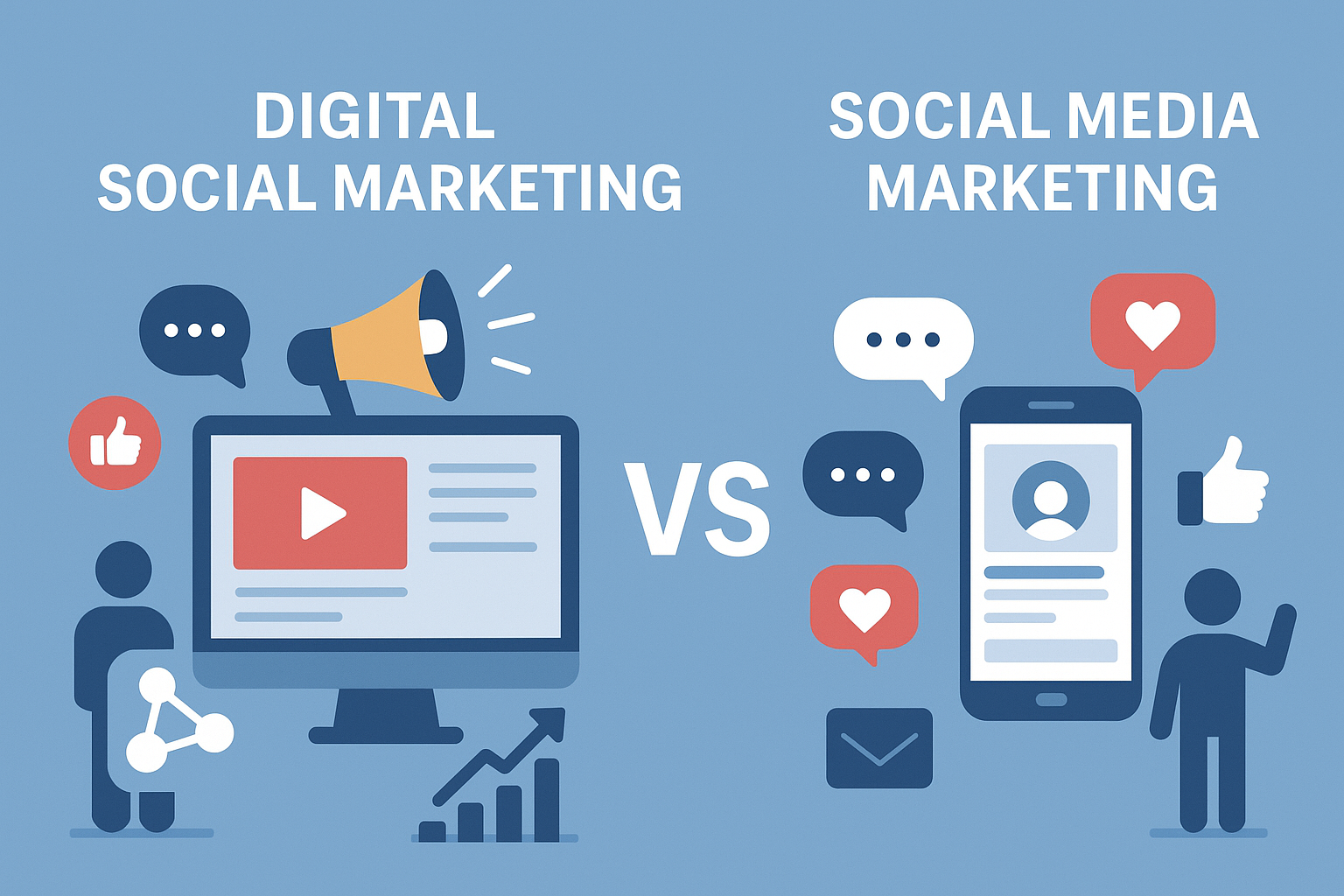
In the dynamic world of online engagement, the terms “Digital Social Marketing” and “Traditional Social Media Marketing” are often used interchangeably. However, this conflation obscures a fundamental strategic shift that is redefining how brands connect with their audiences. While both aim to leverage the power of community and interaction, they differ in scope, philosophy, and execution. Understanding this distinction is crucial for building a resilient, customer-centric marketing strategy that thrives in the modern digital landscape.
At its core, the difference is one of ecosystem versus channel. Traditional Social Media Marketing is a powerful set of tactics confined to specific platforms, whereas Digital Social Marketing is a holistic philosophy that permeates a brand’s entire digital presence.
Defining the Two Paradigms
Traditional Social Media Marketing: The Channel-First Approach
Traditional Social Media Marketing (SMM) is the practice of using social media platforms—like Facebook, Instagram, X (Twitter), LinkedIn, and TikTok—to achieve marketing and branding goals. It is inherently platform-centric. Its primary focus is on creating and sharing content on these platforms to build a following, drive engagement, and promote products or services directly within the platform’s environment.
Key characteristics of Traditional SMM include:
- Platform-Dependent: Its entire existence is tied to the rules, algorithms, and features of third-party platforms (e.g., Meta, ByteDance).
- Campaign-Led: Efforts are often organized around specific campaigns, product launches, or seasonal events.
- Tactical Metrics: Success is measured by platform-native analytics such as likes, shares, comments, follower growth, and reach.
- Brand-Centric Communication: The flow of communication, even when engaging, is primarily one-to-many, with the brand broadcasting its message to an audience.
In this model, the social platform is the destination. The goal is to maximize visibility and interaction on that rented land.
Digital Social Marketing: The Ecosystem-First Philosophy
Digital Social Marketing (DSM) is a broader, more strategic approach. It views “social” not as a set of platforms, but as a core behavior of modern consumers. DSM leverages digital tools and technologies across the entire web to foster genuine social interactions, build community, and create shared value around a brand, far beyond the walls of any single social platform.
Key characteristics of Digital Social Marketing include:
- Platform-Agnostic: It uses social platforms as part of a larger strategy but is not defined by them. The focus is on creating a cohesive social experience wherever the brand exists online.
- Relationship-Led: The goal is to build long-term relationships and community, moving beyond one-off campaign engagements.
- Strategic Metrics: Success is tied to business-outcome metrics like customer lifetime value (CLV), community retention, net promoter score (NPS), and the volume of organic, user-generated content.
- Community-Centric Collaboration: The brand acts as a facilitator of conversations between itself and its customers, and between customers themselves.
In this model, the brand’s own ecosystem (its website, app, community forum) is the central hub, and social platforms are spokes used to amplify and feed that hub.
The Key Points of Divergence
The differences between these two approaches become starkly clear when examined across several strategic dimensions:
1. Owned vs. Rented Land: The Foundation of Value
This is the most critical distinction. Traditional SMM builds on “rented land.” A brand invests immense resources into growing a Facebook Page or Instagram profile, assets it does not own. An algorithm change, a shift in terms of service, or even account suspension can decimate this investment overnight.
Digital Social Marketing prioritizes “owned land.” While it actively uses social platforms, its ultimate objective is to drive meaningful social engagement back to properties the brand controls—a branded community forum, a membership site, a user-generated content gallery on its own website, or its email list. This builds tangible, defensible business value.
2. The Nature of Engagement: Campaigns vs. Community
Traditional SMM engagement is often campaign-based and transient. A brand posts a question, users comment, and the interaction typically ends when the next post appears. The relationship is often shallow and tied to the content of a single post.
Digital Social Marketing fosters continuous community. It creates spaces and reasons for ongoing interaction. For example, a software company might host a community forum where users help each other, or a running shoe brand might create a platform for athletes to log miles and form clubs. This builds a sense of belonging and loyalty that a series of clever posts cannot match.
3. The Role of Content: Platform-Native vs. Universally Shareable
In Traditional SMM, content is crafted specifically for the platform it will live on. A TikTok video is made for TikTok, a LinkedIn article for LinkedIn. The format and style are dictated by the platform’s best practices and algorithm.
In Digital Social Marketing, content is created to be a social object that can travel across the web. A compelling blog post, an insightful infographic, or a powerful customer story is designed to be valuable and shareable, sparking conversations on social media, in forums, on review sites, and in private groups. The content serves the broader social strategy, not just a single platform’s requirements.
4. Measurement: Vanity Metrics vs. Value Metrics
The metrics each approach prioritizes reveal their underlying goals.
- Traditional SMM often focuses on “vanity metrics” like follower count, likes, and shares. While these indicate reach, they are poor proxies for business health and can create a false sense of success.
- Digital Social Marketing is obsessed with “value metrics.” It tracks how social efforts contribute to customer retention, the cost of serving a community member versus a regular customer, the volume of qualified referrals, and the sentiment of discussions across the digital landscape. These metrics directly tie social activities to ROI.
A Practical Illustration: The Athletic Apparel Example
Consider two companies selling running gear:
- Company A (Traditional SMM): Company A has a brilliant Instagram presence. They post beautiful photos of their products, run successful influencer campaigns, and use targeted ads to drive sales. Their engagement rate is high, and their follower count grows steadily. However, their relationship with customers exists primarily within the Instagram app.
- Company B (Digital Social Marketing): Company B also has a strong Instagram, but it’s just one component of their strategy. Their centerpiece is “The Run Club,” a branded online community on their website. Here, members create profiles, log their runs, join challenges, and form local groups. Company B uses Instagram to showcase user achievements from the Run Club and to drive sign-ups. They integrate their community data with their CRM to offer personalized product recommendations.
Outcome: While Company A is vulnerable to an Instagram algorithm change, Company B has built a valuable asset—a dedicated community that drives repeat purchases and provides invaluable product feedback. Company A has an audience; Company B has a tribe.
The Symbiotic Relationship: It’s Not About Replacement
It is vital to note that Digital Social Marketing does not render Traditional Social Media Marketing obsolete. Instead, it provides a strategic framework that gives social media tactics a clearer purpose and greater impact.
Think of it this way:
- Digital Social Marketing is the “Why”: Why are we building these connections? To create a loyal community that advocates for our brand.
- Traditional Social Media Marketing is the “How”: How do we do it? By using Facebook Groups to facilitate discussion, Instagram to showcase our community’s stories, and Twitter for real-time customer engagement.
The most successful modern brands blend the two. They use the powerful, targeted tools of Traditional SMM to identify and attract potential community members, and then they use the principles of Digital Social Marketing to deepen those relationships on their own terms, building a sustainable competitive advantage that no algorithm update can take away.
In conclusion, the evolution from Traditional Social Media Marketing to Digital Social Marketing marks a maturation of digital strategy. It’s a shift from chasing trends on rented land to cultivating a valuable garden on owned land. It’s the difference between talking at an audience and building a world with a community. For brands looking to thrive in the long term, embracing this broader, more strategic view of “social” is no longer an option—it’s a necessity.
