

Introduction
In a major financial reform initiative, Pakistan has decided to close dozens of bank accounts operated by government institutions and transfer billions of rupees into the national treasury. This move comes as part of an agreement with the International Monetary Fund (IMF) aimed at improving fiscal discipline and reducing borrowing costs. The decision signals a strategic effort to centralize public funds and strengthen economic management.
Background of the Decision
The government’s decision to proceed with reforms follows a staff-level agreement reached with the IMF last month. Under this agreement, authorities have committed to consolidating financial resources by eliminating redundant or inefficient banking practices within government institutions.
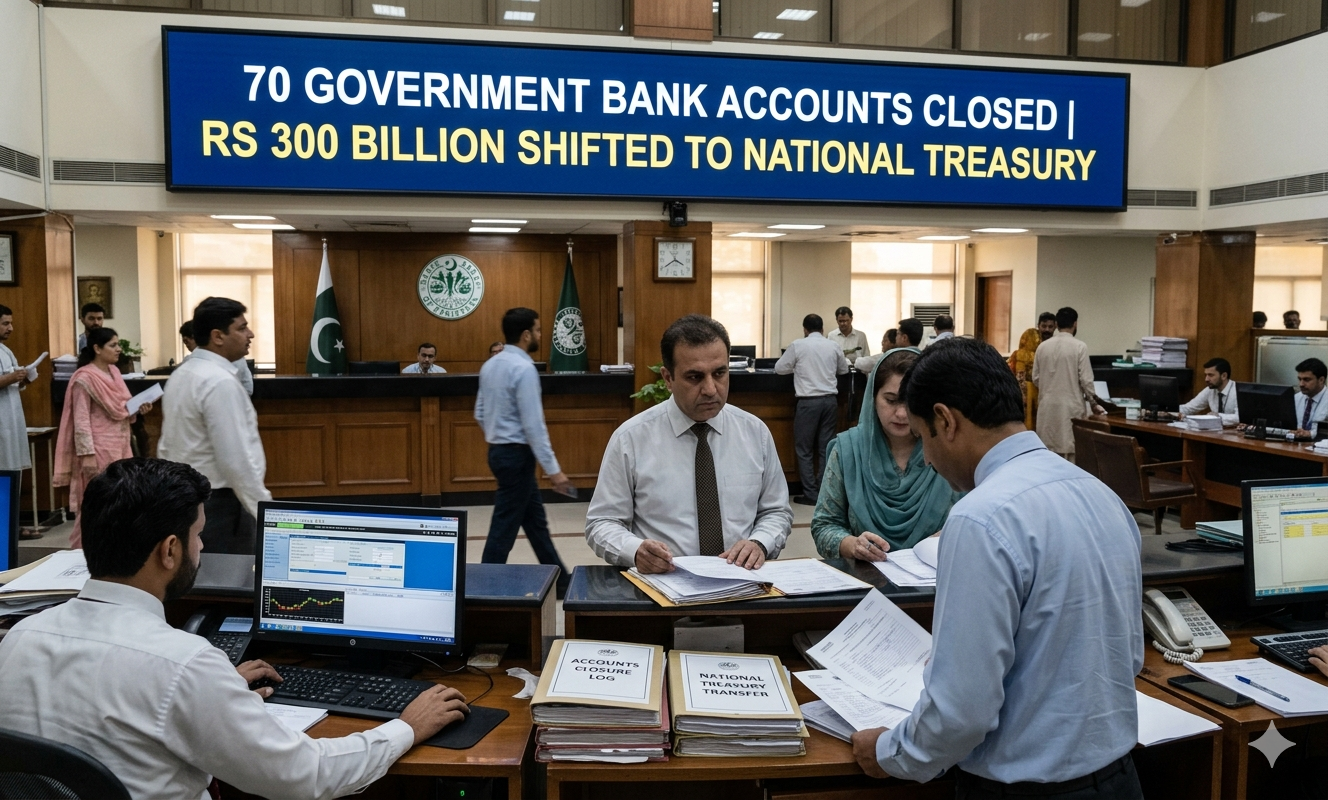
As part of the initial phase, approximately 70 bank accounts have been shut down, with around Rs300 billion transferred to the national treasury. This step represents a significant milestone in ensuring that public funds remain under centralized control. The move also aligns with broader fiscal reforms where government bank accounts closed becomes a key strategy for improving transparency.
Previous Phases and Financial Transfers
Before this latest development, authorities had already taken steps to close 242 accounts, transferring approximately Rs200 billion into the Treasury Single Account system. This earlier phase laid the groundwork for the current reforms.
Now, with additional measures underway, officials plan to close nearly 250 more non-savings accounts, which collectively hold around Rs400 billion. These efforts demonstrate the government’s commitment to financial restructuring. The ongoing process of government bank accounts closed continues to play a central role in strengthening fiscal discipline.
IMF’s Perspective on Financial Practices
The IMF has consistently raised concerns regarding the practice of government entities holding funds in private bank accounts. According to the institution, these funds often generate profits for agencies while the government simultaneously borrows money at higher interest rates.
This situation creates inefficiencies in public finance management. Therefore, the IMF has advocated for the consolidation of funds into a single treasury system. The policy direction emphasizing government bank accounts closed aims to eliminate such contradictions and improve financial efficiency.
Government’s Balanced Approach
While implementing these reforms, the Ministry of Finance has adopted a cautious approach, particularly concerning autonomous institutions. Officials recognize that a complete ban on independent accounts could disrupt the financial operations of organizations that rely on self-generated revenues.
As a result, authorities are considering partial exemptions for institutions that do not receive funding from the federal budget. This balanced strategy ensures that reforms do not compromise operational independence while still promoting accountability. Even so, the broader goal of government bank accounts closed remains intact as part of the reform agenda.
Second Phase of Reforms
The government plans to expand these measures in the second phase by targeting savings accounts held by ministries and divisions. This phase will further strengthen the Treasury Single Account system and ensure better oversight of public funds.
However, exemptions are likely for certain autonomous bodies to maintain their financial flexibility. Policymakers aim to strike a balance between centralization and operational efficiency. The continued implementation of government bank accounts closed is expected to improve fiscal management over time.
Concerns Raised by the Senate Committee
The Senate Standing Committee on Finance has also expressed concerns regarding the scale of funds held by government agencies in private accounts. According to reports, nearly 200 agencies and regulatory bodies maintain over Rs1 trillion outside the official treasury system.
This practice violates provisions of the Public Finance Management Act 2019, which mandates transparency and centralized control of public funds. The committee has urged authorities to accelerate reforms and ensure compliance with legal requirements. These concerns further justify the policy of government bank accounts closed as a necessary step toward accountability.
Impact on Domestic Debt Management
In addition to account closures, Pakistan has committed to improving its domestic debt structure. The government has assured the IMF that it will increase the average maturity of domestic debt to four years and two months by June 2027.
Previously, the maturity period stood at approximately two and a half years at the beginning of the program but has now increased to around three and a half years. Extending the maturity period helps reduce refinancing risks and strengthens financial stability.
Broader Economic Reforms
The Ministry of Finance has also outlined plans to stabilize the domestic debt structure further by broadening the investor base. Additionally, the government aims to gradually reduce reliance on borrowing from the State Bank of Pakistan.
These reforms are part of a comprehensive strategy to improve economic resilience. By centralizing funds and optimizing debt management, the government seeks to create a more sustainable financial system.
Benefits of Centralizing Public Funds
Centralizing government funds offers several advantages. First, it enhances transparency by ensuring that all financial transactions are recorded within a unified system. Second, it reduces the cost of borrowing, as the government can utilize its own funds instead of relying on expensive loans.
Moreover, it improves accountability by minimizing opportunities for misuse of public resources. These benefits highlight why the policy of closing accounts is critical for long-term economic stability.
Conclusion
In conclusion, Pakistan’s decision to close 70 government bank accounts and transfer Rs300 billion to the national treasury marks a significant step toward fiscal reform. By consolidating public funds and aligning with IMF recommendations, the government aims to improve transparency, reduce borrowing costs, and strengthen financial management.
The ongoing process of government bank accounts closed reflects a broader commitment to economic stability and accountability. While challenges remain, particularly in balancing autonomy and centralization, these reforms lay the foundation for a more efficient and transparent financial system. Ultimately, sustained implementation will play a key role in shaping Pakistan’s economic future.
FAQ
Q1: Why did Pakistan close government bank accounts?
Pakistan closed these accounts to centralize funds, improve transparency, and reduce borrowing costs under IMF recommendations.
Q2: How much money was transferred to the national treasury?
Approximately Rs300 billion was transferred during this phase of the reform.
Q3: What is the Treasury Single Account system?
It is a centralized system where all government funds are managed to ensure transparency and efficiency.
Q4: Will all government accounts be closed?
No, some autonomous institutions may receive exemptions to maintain their financial independence.
Q5: How will this reform benefit the economy?
It will reduce borrowing costs, improve fiscal discipline, and strengthen overall financial management.
